Archives
-
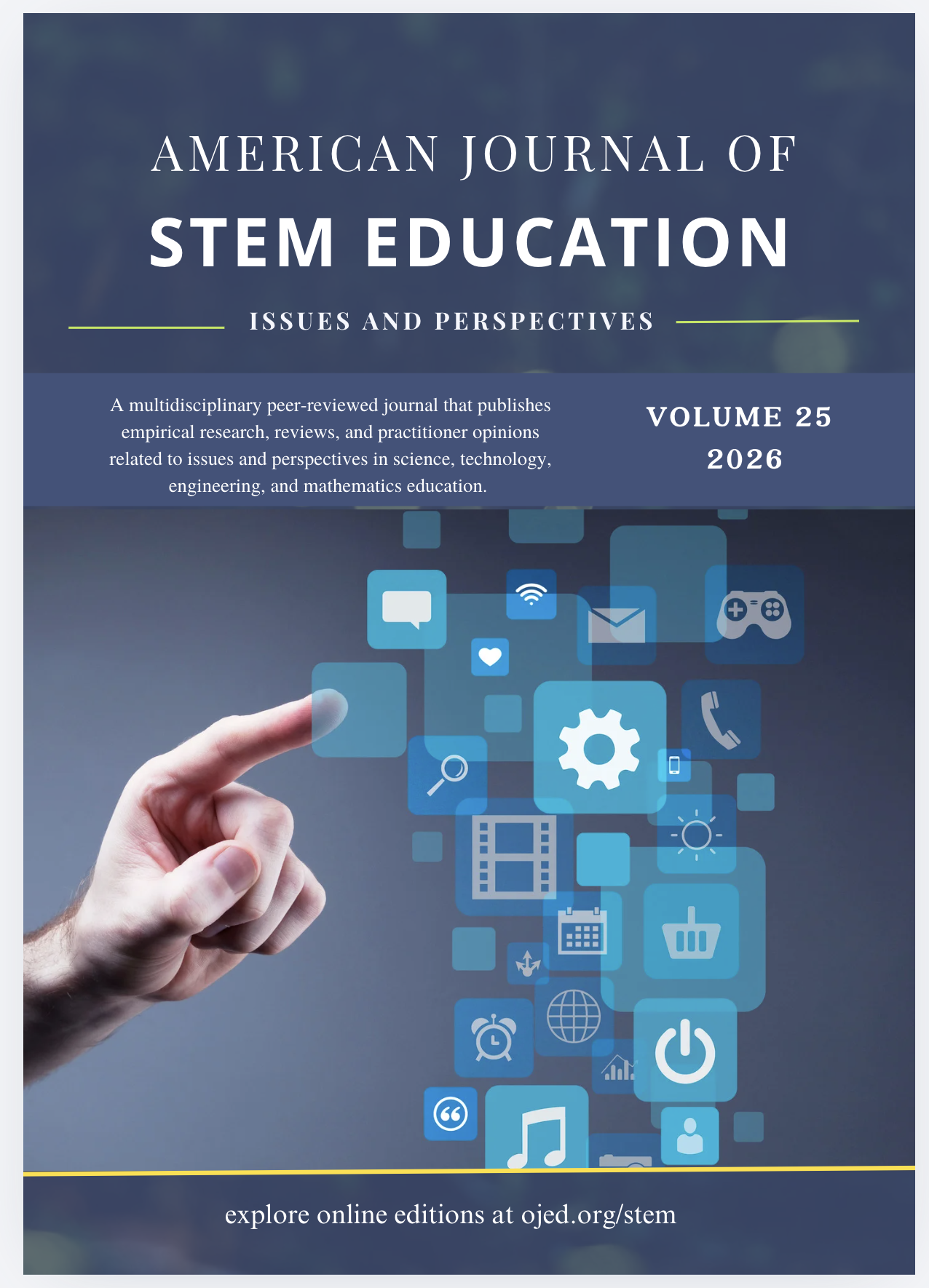
American Journal of STEM Education
Vol. 25 (2026)Volume 25 (2026) of the American Journal of STEM Education presents 15 scholarly articles authored by 38 authors from 25 institutional affiliations across 10 countries. This volume brings together timely research on STEM education, artificial intelligence, mathematics teaching and learning, teacher preparation, assessment, student readiness, demographic policy, entrepreneurship, and educational equity. The articles examine important topics such as teachers’ digital literacy, AI-led mathematics professional development, informal STEM learning and AI literacy, ethical AI frameworks, ChatGPT use in higher education, project-based STEM instruction, classroom assessment fairness, and STEM student engagement.
-
American Journal of STEM Education
Vol. 24 (2026)Vol. 24 (2026) of the American Journal of STEM Education brings together 15 peer-reviewed articles authored by 46 scholars representing at least 22 institutions across 10 countries, highlighting the journal’s commitment to advancing innovative, equitable, and globally relevant STEM education research.
Contributors represent institutions from Bangladesh, Germany, Ghana, India, Indonesia, Morocco, Pakistan, Suriname, Turkey, and the United States, reflecting the increasingly international nature of STEM teaching, learning, and policy scholarship. Participating institutions include Akenten Appiah-Menka University of Skills Training and Entrepreneurial Development (Ghana), Universität Bielefeld (Germany), Universitas Negeri Padang (Indonesia), Al Akhawayn University (Morocco), New York University (USA), Rutgers University (USA), Texas A&M University (USA), Florida International University (USA), and several other universities and research organizations worldwide. This issue explores a broad range of contemporary topics, including artificial intelligence in STEM education, technology acceptance, computer science expansion in schools, self-regulated learning, generative AI and assessment, multilingual and equitable AI implementation, STEM identity development, student wellness, environmental sustainability, governance in green schools, mathematics education, and educational innovation. Several articles examine the opportunities, challenges, and ethical implications of AI in teaching and learning, while others focus on expanding access, strengthening student success, and fostering inclusive STEM pathways across diverse educational contexts.
Editors:
Dr. Delarious O. Stewart, East Texas A&M University
Dr. LaVelle Hendricks, East Texas A&M University
Dr. Dimitra Smith, East Texas A&M UniversityProduction Editors:
Uche Osuji, Georgia State University, USA
Cherryllynn Williams, Morgan State University, USA
Roshan Poudel, Tribhuvan University, Nepal -
American Journal of STEM Education
Vol. 23 (2026)Vol. 23 (2026) of the American Journal of STEM Education brings together 15 peer-reviewed articles authored by 39 scholars representing more than 20 institutions across at least 10 countries. Contributors span institutions in the United States, Argentina, Pakistan, the United Kingdom, Hungary, Ghana, Israel, Timor-Leste, India, and other international contexts, reflecting the journal’s growing global reach. This volume advances contemporary STEM scholarship through research on AI literacy and GPT-5, science and mathematics achievement, project-based and inclusive learning, engineering education, gender and equity in STEM, social-emotional development, and STEM pathways from school to higher education.
Editor: Dr. Oswaldo Castro
-
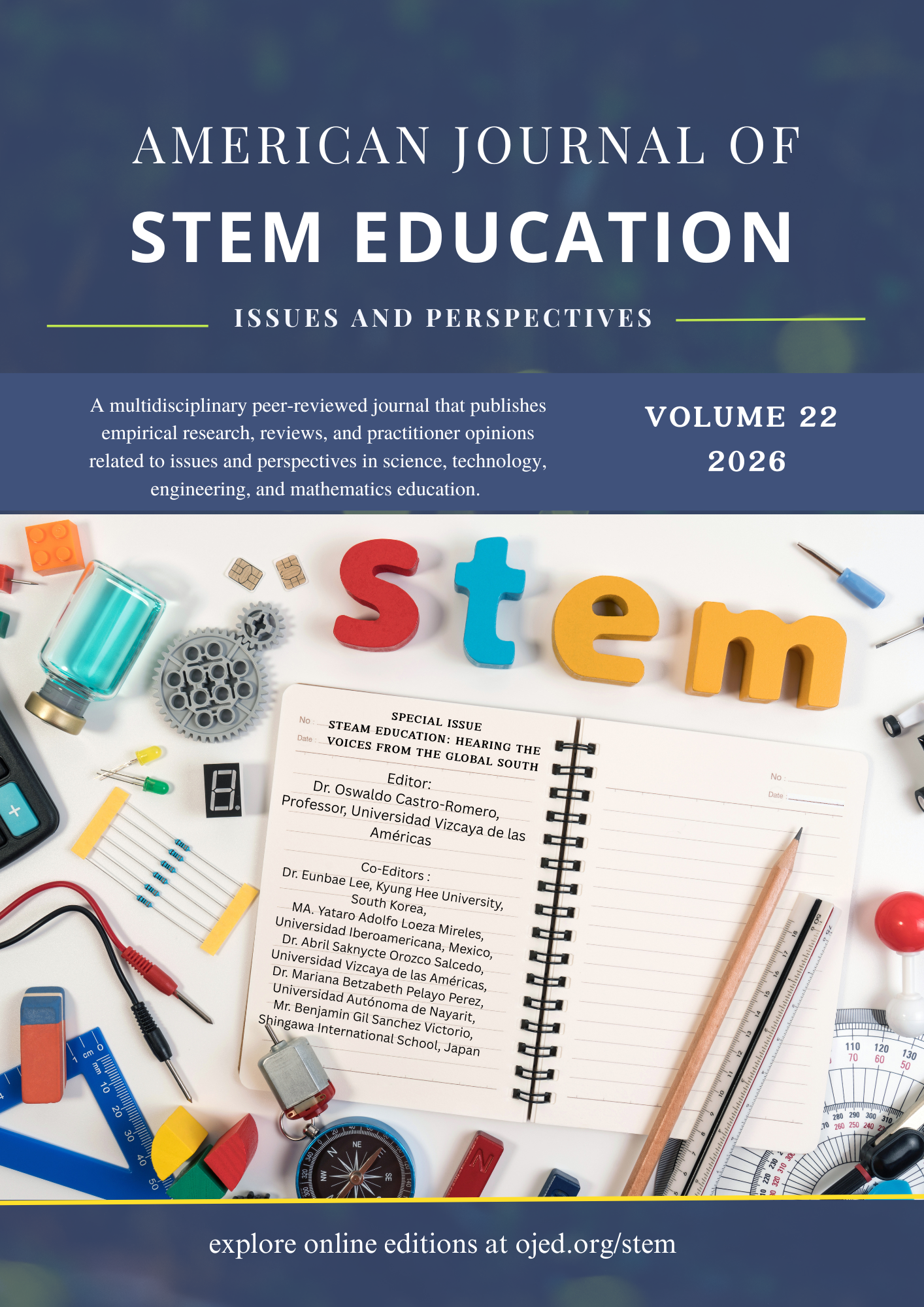
American Journal of STEM Education
Vol. 22 (2026)This new volume on STEAM education brings together 37 scholars from more than 20 universities and institutions across approximately 9 countries to examine pressing educational, technological, linguistic, and social issues shaping STEM and STEAM learning in diverse global contexts. Spanning regions including Mexico, Nigeria, Ghana, Timor-Leste, Indonesia, Bhutan, Pakistan, and the United States, the collection highlights innovative pedagogies, equity-centered practices, AI-enhanced instruction, multilingual learning, environmental literacy, teacher experiences, and workforce development. Through interdisciplinary perspectives and culturally grounded research, the volume amplifies voices from the Global South while advancing important conversations on educational transformation, inclusion, creativity, and sustainable development in STEM and STEAM education.
Editor: Dr. Oswaldo Castro-Romero, Professor, Universidad Vizcaya de las Américas
Co-Editors : Dr. Eunbae Lee, Kyung Hee University, South Korea; MA. Yataro Adolfo Loeza Mireles, Universidad Iberoamericana, Mexico; Dr. Abril Saknycte Orozco Salcedo, Universidad Vizcaya de las Américas; Dr. Mariana Betzabeth Pelayo Perez, Universidad Autónoma de Nayarit; Mr. Benjamin Gil Sanchez Victorio, Shingawa International School, Japan
-
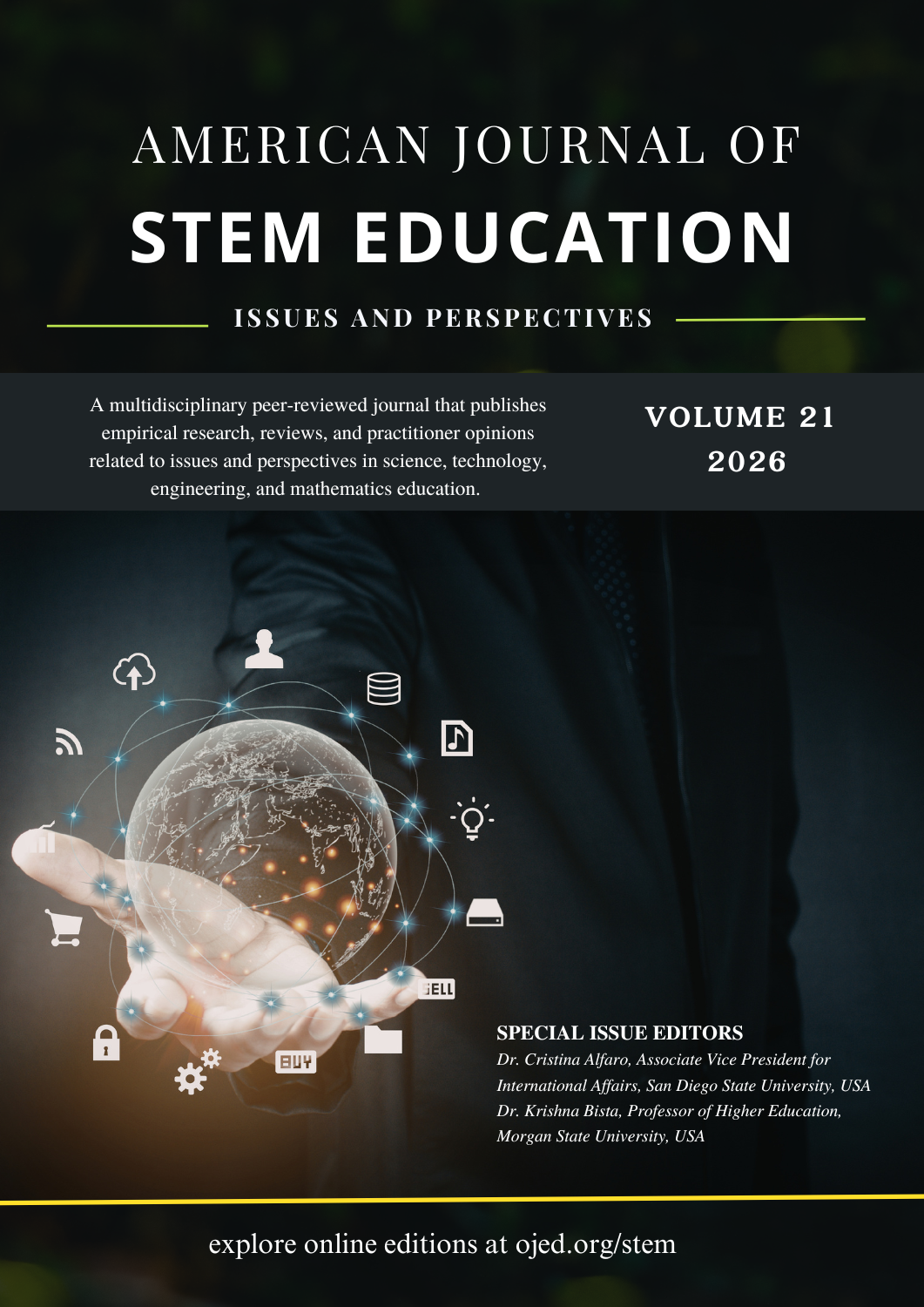
American Journal of STEM Education (STEM & Internationalization)
Vol. 21 (2026)Special Issue Editors: Dr. Cristina Alfaro, Associate Vice President for International Affairs, San Diego State University, USA | Dr. Krishna Bista, Professor of Higher Education, Morgan State University, USA
This volume features 12 authors representing 10 institutions across 6 countries: Lao PDR, Japan, the United States, Mexico, Morocco, and Ghana. Together, their work highlights the importance of inclusive international partnerships, diverse epistemologies, and globally engaged STEM education in advancing innovation, research capacity, and workforce development worldwide. Authors in this volume examine how STEM education is increasingly shaped by international collaboration, global mobility, and shifting geopolitical dynamics. The articles in this issue illuminate how universities, scholars, and policymakers are rethinking STEM education within a deeply interconnected world. The volume begins with studies that highlight institutional responses to internationalization in diverse contexts, including Laos and China, demonstrating how global engagement strengthens research capacity and academic development. Other contributions explore innovative international partnerships, such as a U.S.–Mexico dual degree model that integrates medicine and public health to prepare globally competent professionals. The issue also addresses the intersection of STEM education with economic strategy and national security, including workforce preparation for the expanding semiconductor industry and shifting patterns in global STEM student mobility influenced by immigration policy.
-
American Journal of STEM Education
Vol. 20 (2026)This volume includes contributions from 17 authors representing 12 universities and colleges across 7 countries: Nepal, Tunisia, the United States, Canada, Japan, France, and Ghana, highlighting the global reach and collaborative nature of contemporary STEM education research. This volume features cutting-edge research on interdisciplinary and cross-cultural approaches to STEM teaching and learning. Highlights include investigations into artificial intelligence in project-based learning and its impact on students' perceptions, multidimensional analyses of university students’ perceptions of subjects, and innovations in undergraduate statistics education informed by pedagogical experiments. The volume also addresses structural and pedagogical challenges in STEM higher education from an international perspective and explores cross-cultural fairness in classroom assessment. Finally, it presents a cross-institutional study on AI adoption and student productivity, providing insights into technology integration in higher education across the United States and Nepal.
-

American Journal of STEM Education
Vol. 19 (2026)Vol. 19 (2026) of the American Journal of STEM Education highlights innovative research at the intersection of student success, technology, and STEM learning. This issue brings together timely studies on mental health and self-care among college students, new pathways to strengthen STEM career readiness at historically Black colleges, and fresh insights into how communication styles influence student engagement with AI tutors. The volume also examines the transformative potential of AI-supported COIL initiatives for advancing the Sustainable Development Goals, presents a robust framework for developing teacher efficacy within Fablab environments, and investigates the interdisciplinary transfer of argumentation skills to enhance writing and reasoning in STEM contexts.
-
American Journal of STEM Education
Vol. 18 (2026)This volume features cutting-edge scholarship addressing innovation, equity, and technology in STEM education. Topics include strengthening rural preservice teacher preparation, analyzing gender trends in career and technical education, exploring post-pandemic shifts in online English learning, advancing student-centered pedagogies, integrating AI in business English instruction, and promoting cultural diversity through the use of artificial intelligence. Together, these articles reflect the journal’s commitment to advancing inclusive and transformative STEM education worldwide.
-

American Journal of STEM Education-- Equity and Engagement in STEM Education
Vol. 17 (2026)This volume advances practical, equity-driven strategies for engaging diverse learners in STEM. Articles examine how culturally relevant pedagogy and BlackCrit can center Black girls and disrupt bias in STEM spaces; propose decentralized vocational pathways in Nigeria’s secondary curriculum; and offer faculty reflections on critical consciousness as a lever for more just STEM teaching. A cross-border virtual exchange links preservice teachers with K–12 students to build global competencies, while a study of linguistic strategies in Marrakech’s digital marketplace highlights communication as a competitive—and teachable—STEM-adjacent skill. The closing essay analyzes workforce development in Africa, identifying impediments and solutions to bridge the skills gap. Together, these contributions translate theory into actionable models for inclusive pedagogy, curriculum reform, and workforce readiness across local and global contexts.
Editors:
Dr. Taziah Kenney (Rowan College at Burlington County) |Dr. Kim C. O’Halloran (Rutgers University) -
American Journal of STEM Education
Vol. 16 (2025)This volume spotlights evidence-based innovations in STEM teacher preparation, showcasing diverse voices and institutions that are reshaping how we prepare the next generation of educators. From reconceptualizing writing in science teacher education and addressing teacher shortages and racial disparities through HBCU-led initiatives, to examining culturally responsive classroom management in urban settings, the issue provides fresh insights into urgent challenges in the field. A reflective review of 25 years of UTeach highlights both successes and ongoing challenges, while other contributions explore how student-led organizations foster belonging among pre-service teachers and how research-based classroom initiatives equip science teachers with authentic, inquiry-driven practices. Together, these articles affirm the critical role of innovation, inclusivity, and sustained collaboration in building strong, diverse, and future-ready STEM teaching communities.
Editors:
Uchenna Emenaha Miles, PhD, University of Texas at San Antonio, USA
Grant Clayton, PhD, University of Colorado Springs, USA
Download eBook Here | Order hardcopies here -

American Journal of STEM Education
Vol. 15 (2025)This volume reflects the richness of global perspectives in STEM education, featuring research on generative AI to support students with disabilities, innovative approaches to integrating green finance into vocational curricula, and gamification strategies in Ghanaian mathematics classrooms. Equally compelling are studies advancing equity and belonging for underrepresented STEM teachers, examining the experiences of mathematics apprentice teachers, and fostering diversity in healthcare through enrichment programs. Collectively, these contributions highlight pressing issues and creative solutions that shape the future of inclusive, sustainable, and transformative STEM education worldwide.
Editors:Uchenna Emenaha Miles, PhD, University of Texas at San Antonio, USA
Grant Clayton, PhD, University of Colorado Springs, USA
John Jefferson Besa, MD, Harvard University, USA -

Art and Technology in STEM Education
Vol. 14 (2025)Editors
Dr. Sahar Aghasafari, University of South Carolina Lancaster, USA
Dr. Jeremy Blair, Tennessee Tech University, USAThis volume of the American Journal of STEM Education spotlights the transformative fusion of art and technology in reimagining STEM education. From AI-enhanced creativity and graphic storytelling to participatory theatre and digital illustration, the volume captures the dynamic potential of STEAM approaches to foster deeper engagement, equity, and innovation. Through diverse perspectives and bold pedagogical insights, this collection challenges traditional boundaries and affirms the role of artistic expression as essential to shaping inclusive, interdisciplinary, and future-ready learning environments.
-

American Journal of STEM Education: Issues and Perspectives
Vol. 13 (2025)This volume explores pressing issues and innovative strategies in STEM education with a global lens. Articles examine how remittances support education in the Global South, highlight doctoral insights into student success in U.S. community colleges, and analyze how the use of ICT and teacher attitudes shape math outcomes in Ghana. A systematic review examines equity for girls in sub-Saharan Africa through the lens of intersectionality. Other contributions explore AI and immersive technologies in global learning and the impact of experiential, inclusive teaching for deaf learners. Together, the articles emphasize equity, digital innovation, and inclusive practices, offering fresh perspectives for educators, researchers, and policymakers committed to advancing STEM education worldwide.
-

American Journal of STEM Education: Issues and Perspectives
Vol. 12 (2025)This volume presents timely, interdisciplinary scholarship addressing critical challenges and innovations in STEM education across global contexts. This issue explores student equity, culturally responsive pedagogy, and technology-enhanced learning environments through diverse methodological lenses.
Featured articles examine the impact of teacher inexperience on student exclusion in Texas high schools, the intersection of trauma and mathematics learning among African American students, and the role of teaching practices in fostering critical thinking in Japanese classrooms. Further contributions highlight community-industry partnerships in STEM engagement through solar energy education, the integration of AI-driven adaptive learning in calculus instruction, and the cultural dynamics influencing CSR strategies of multinational corporations in Nepal.
-

American Journal of STEM Education: Issues and Perspectives
Vol. 11 (2025)This volume of the American Journal of STEM Education: Issues and Perspectives presents practical insights addressing critical challenges and innovations across science, technology, engineering, and mathematics education. Contributors explore emerging trends, equity in STEM access, curriculum development, and technology integration in teaching and learning. The volume serves as a valuable resource for educators, researchers, and policymakers committed to advancing STEM education.
Print copies available in the following countries: US, UK, DE, FR, ES, IT, NL, PL, SE, JP, CA, AU
-

American Journal of STEM Education: Issues and Perspectives
Vol. 10 (2025)This latest volume showcases interdisciplinary research that advances understanding and practice in STEM education across diverse contexts. Featured studies explore the transformative role of emerging technologies in revolutionizing STEM instruction, the influence of perceived belonging on YouTube usage among rural students, and socioeconomic disparities in school discipline outcomes. Additional contributions examine the effectiveness of school health services in Nepal, the impact of program titles on academic identity in construction education, and scholarly reflections on the integration of artificial intelligence in higher education. Together, these articles offer timely insights and practical implications for educators, policymakers, and researchers committed to equity, innovation, and excellence in STEM education.
-

American Journal of STEM Education: Issues and Perspectives
Vol. 9 (2025)Featuring 15 contributing authors, this volume offers critical insights into current issues and innovations in STEM teaching and learning. Topics include math readiness by language status, AI-driven strategies to reduce math anxiety, and the impact of caffeine on student stress. Additional studies explore digital tools for graduate supervision, the role of mentorship in shaping STEM careers, and a model of online learning dexterity. This volume provides evidence-based perspectives for advancing equity, engagement, and success in STEM education.
Print copies available in the following countries: US, UK, DE, FR, ES, IT, NL, PL, SE, JP, CA, AU
-
American Journal of STEM Education: Issues and Perspectives
Vol. 8 (2025)Looking for actionable insights in STEM education? Vol. 8 (2025) of the American Journal of STEM Education: Issues and Perspectives provides just that. This issue delves into real-world challenges, offering research-backed strategies for mitigating job-hopping in IT, improving faculty retention at community colleges, and enhancing project-based learning. Explore how to integrate cultural responsiveness into statistics and understand the role of mindfulness in addressing financial trauma. Gain practical knowledge to improve your teaching, research, and practice in STEM fields.
-

American Journal of STEM Education: Issues and Perspectives
Vol. 7 (2025)The latest issue of the American Journal of STEM Education: Issues and Perspectives explores innovative approaches to STEM learning, with a strong focus on artificial intelligence, mathematics education, and educational equity. Highlights include AI integration in STEM classrooms, professional development in AI literacy, the role of history in mathematics self-efficacy, and discovery learning experiences. Additionally, the issue features insights into community colleges in Sierra Leone as a solution to youth unemployment.
Download eBook (pp. 128)
-
American Journal of STEM Education: Issues and Perspectives
Vol. 6 (2025)The American Journal of STEM Education: Issues and Perspectives (Vol. 6, 2025) presents a diverse collection of research exploring AI innovation, STEM education strategies, workforce development, and interdisciplinary collaboration. This issue features studies on Chinese universities' advancements in AI, strategies for teaching academic writing in STEM, doctoral students’ insights on leveraging AI tools, the impact of ergonomic practices on employee performance, and a framework for diversifying the AI talent pipeline through HBCU-industry-government partnerships. Additionally, a unique study applies couple therapy principles to strengthen co-founder relationships in STEM ventures. This volume offers valuable insights for educators, researchers, and professionals shaping the future of STEM education and innovation.
-

American Journal of STEM Education
Vol. 5 (2025)This issue explores the integration of technology in learning, with a focus on the impact of online education during the COVID-19 pandemic and the use of AI-generated visuals to enhance student understanding of STEM careers. It delves into ethical decision-making and academic integrity in STEM fields, examining challenges faced by students in professional programs. Advancements in interdisciplinary research are featured through the application of cognitive science and neuroimaging in construction project management. Additionally, the issue offers insights into the mathematics performance of emergent bilingual students, comparing pre- and post-pandemic outcomes.
-

American Journal of STEM Education: Issues and Perspectives
Vol. 4 (2025)This issue presents a dynamic collection of articles exploring critical themes in STEM education. This issue examines the impact of the Verizon STEM Achievers Program on middle school students, AI's crisis of legitimacy in higher education, and the integration of ICT by English teachers in Nepal. It also addresses challenges of disembodiment in STEM curricula in Canadian classrooms, strategies for tackling racial inequities in AI tools like ChatGPT, and a framework for centering equity in STEM education. These thought-provoking contributions offer valuable insights for educators, researchers, and policymakers dedicated to fostering innovation and inclusion in STEM fields. Read the full issue online.
-
American Journal of STEM Education: Issues and Perspectives
Vol. 3 (2025)This issue explores critical topics such as the predictive relationship between students’ math anxiety and performance, the mediation effects of social support and psychological capital on academic stress and burnout, and a practical guide to writing review articles for novice researchers. Other highlights include the link between teaching variables and mathematics achievement in Ghana, the adversity quotient in mathematics learning, and the influence of demographic factors on test anxiety.
-
American Journal of STEM Education: Issues and Perspectives
Vol. 2 (2024)This issue examines the impact of workplace learning on employee performance in Singapore’s SMEs, rethinks fairness in classroom assessments through cultural dimensions, and offers a framework to analyze project management cognitive processes using MNE-Python. Additional highlights include insights into enhancing STEM learning through extracurricular activities in Japan, the inspirational impact of a STEMM simulation program on underprivileged middle school students, and school management strategies for fostering lifelong skills acquisition among STEM students in public secondary schools.
-

American Journal of STEM Education: Issues and Perspectives
Vol. 1 (2024)This issue features a diverse range of articles, including analyses of STEM graduation trends and educational reforms, the integration of multimedia in English language pedagogy for pre-service teachers, and equitable higher education administration in Nigeria. Other highlights explore tech-enhanced English instruction, the use of generative AI to enhance international education and the role of disruptive technologies in optimizing community college apprenticeships. A thought-provoking review on hybrid and remote work in higher education completes this landmark issue.
 Call for Special Issue Proposals