Sustainable STEAM Implementation in a Small Rural High Poverty School District
DOI:
https://doi.org/10.32674/mp0gmm03Abstract
Public School leaders are aware of the need to promote STEM instruction and accessibility for students in high poverty rural public schools. Working with a focus on addressing critical awareness among stakeholders, the district used STEAM strategies to leverage Arts and STEM resources to improve instruction through high quality professional development, positive community engagement and grant funding. By blending arts and academics pedagogy, educators created opportunities for all students to experience classrooms focused on standards-based content and critical soft skills. This article summarizes the steps taken by a small high poverty school district in South Carolina to implement STEAM strategies to promote academic and arts instruction. From kindergarten children collaborating to program a toy mouse to navigate a miniature city designed by classmates, middle school art and music students exploring 3-D printers and sound-motion relationships to a championship high school robotics team translating scientific theory to practice and high school engineering students innovating in problem solving, classrooms throughout the district embrace STEAM as an integral approach to world class teaching and learning. Making STEAM a part of school culture required an intentional approach to build a broad foundation including educators, parents, administrators, and community partners. Using strategic actions, the district has leveraged local, state and federal funding to support standards-based instruction, rigorous content acquisition, the essential soft skills practiced in the arts and engineering processes to improve instruction.

Downloads
Published
Issue
Section
License
Copyright (c) [year] [author]
This work is licensed under a Creative Commons Attribution 4.0 International License.
This license permits unrestricted use, distribution, and reproduction in any medium, provided the original author and source are credited. https://creativecommons.org/licenses/by/4.0
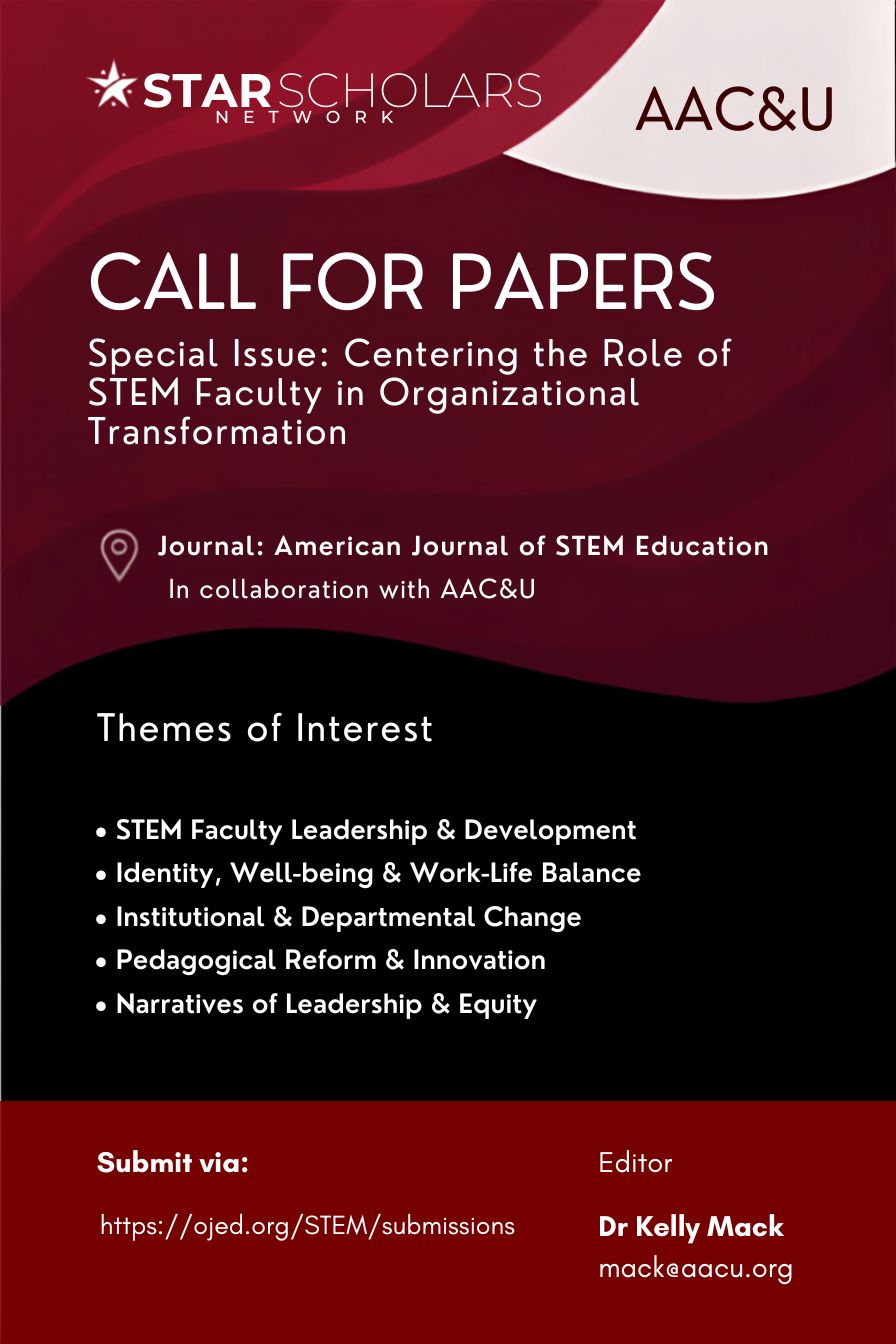
 Call for Special Issue Proposals